Latest News
Our Patrons
Google and Oregon's Leading Innovation Partners Launch Oregon AI Accelerator to Fuel the Next Wave of AI Entrepreneurship
PORTLAND, OR. – November 17, 2025 – A coalition of Oregon's top innovation and academic institutions, today announced the launch of the Oregon AI Accelerator, a first-of-its-kind statewide initiative designed to support early-stage founders building transformative, AI-first companies. Backed by seed funding from Google, and supported by the Metro Region Innovation Hub, Portland State University, Oregon Health & Science University, Oregon State University, the Oregon Entrepreneurs Network, the Technology Association of Oregon, and TiE Oregon, the Accelerator will launch its inaugural pilot in February 2026. The program will bring together 20 early-stage AI startups for a three-month hybrid accelerator experience combining in-person sessions in Portland with virtual programming. Participants will receive mentorship, validation support, and access to Oregon's thriving innovation ecosystem – without giving up equity – and will compete for up to $50,000 in equity-free grant prizes. "This program is much bigger than accelerating startups—it's about helping Oregon small businesses compete and grow in the age of AI," said Katy Bowman, manager of Google's community development and engagement program. "By investing in entrepreneurs and connecting them to resources statewide, we're helping ensure Oregon remains a place where innovation drives broad economic opportunity." The Oregon AI Accelerator is a collaborative initiative uniting Oregon's leading tech organizations, investors, and universities to launch and scale AI startups. The Accelerator empowers early-stage founders to build globally competitive companies while remaining grounded in values of innovation, equity, and community impact. It is building on the success of the Oregon AI Bootcamp, which trained more than 40 founders in June and demonstrated strong regional demand for deeper, hands-on support. The new Accelerator expands on that model with a comprehensive program designed to help founders refine their business models, strengthen technical capabilities, and prepare for investment. "This initiative represents the collaborative spirit that defines Oregon's innovation community," said Joseph Janda, Assistant Vice President for Innovation at PSU. "By bringing together academia, industry, and investors, we're creating a powerful platform for founders to build scalable companies that reflect Oregon's values of innovation, equity, and impact." The program will be coordinated by the Metro Region Innovation Hub, which is part of Business Oregon's statewide network of regional Innovation Hubs dedicated to maximizing support for innovation-based entrepreneurs. "The Oregon AI Accelerator is a model for how public, private, and academic partners can come together to make Oregon a true leader in responsible, human-centered AI innovation," added Jack Phan, the incoming Director of the Oregon AI Accelerator Program. Applications for the Oregon AI Accelerator open November 17, 2025, and close December 15, 2025. The pilot cohort will run from February 2 through May 15, 2026. While startups from anywhere may apply, at least 50% of the cohort will be Oregon-based to ensure strong local impact and growth. "This accelerator would not be possible without the generous support of Google and the dedication of our partner organizations," said Cara Turano, Executive Director of Oregon Entrepreneurs Network. "Together, we're building the foundation for Oregon to emerge as a global hub for AI innovation, where founders can thrive and meaningful technologies can take root." Support for Oregon's AI Accelerator continues Google's commitment in Oregon. With data centers in The Dalles and an office in downtown Portland, Google has invested more than $2 billion in Oregon since 2006. Through its tools and products, the company has also helped generate $8.6 billion in economic activity for Oregon businesses and nonprofits. The Metro Region Innovation Hub's mission is to provide Portland-area entrepreneurs with the resources, mentorship, and opportunities they need to succeed. The Hub exists to foster collaboration between entrepreneurs and business service providers, ensuring mutual trust and access to essential resources, as we work together to build a stronger, more inclusive innovation ecosystem in the Portland Metro region.
Oregon AI Startup Bootcamp Empowers the Next Generation of AI Entrepreneurs
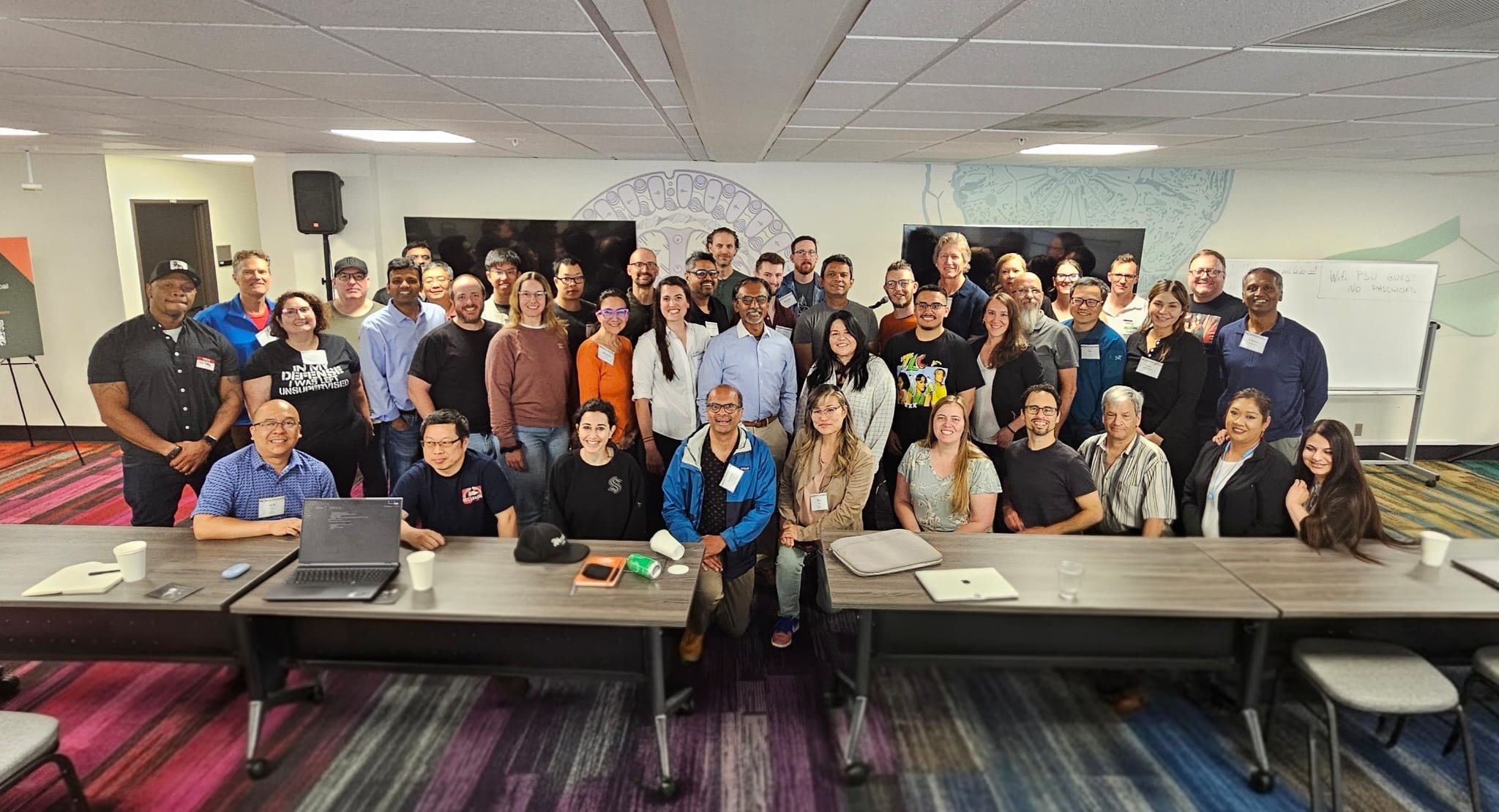
Portland, OR – The Oregon AI Startup Bootcamp successfully concluded its intensive three-day program this week, equipping 44 aspiring founders with the tools, knowledge, and mentorship needed to turn AI concepts into fundable, scalable ventures. Hosted by the Oregon Entrepreneurs Network (OEN) at the Portland State University’s Business Accelerator, the bootcamp was delivered in partnership with Google, Metro Region Innovation Hub, Portland State University Center for Entrepreneurship, Silicon Forest Partnership, Technology Association of Oregon, and TiE Oregon. The vision for the bootcamp emerged just four months ago as a conversation among four local tech entrepreneurs and investors—Bobby Kandaswamy, Charlie Kawasaki, Kristy Edwards, and Sce Pike—who identified an urgent need to support first-time founders navigating the rapidly evolving AI startup landscape. Recognizing that traditional programs often overlook early-stage, domain-driven innovators, the group partnered with OEN, PSU, and the Metro Region Innovation Hub to develop a highly curated, targeted, and inclusive program tailored for aspiring AI entrepreneurs. Thanks to generous sponsorship from Google, Portland Metro Innovation Hub, and Silicon Forest, the bootcamp was offered completely free of charge to all 44 participants—making high-quality entrepreneurial training and mentorship accessible to founders regardless of background or financial resources. Designed to catalyze innovation in Oregon’s growing AI ecosystem, the bootcamp featured expert-led sessions covering company formation, legal fundamentals, AI product development, go-to-market strategy, team building, and fundraising. Interactive workshops and pitch coaching gave participants practical, hands-on experience to validate ideas and prepare for investor engagement. The agenda also included in-depth discussions with venture investors and successful tech founders on how to pitch effectively, raise capital, overcome the product–market fit challenge, and build scalable business models and go-to-market strategies. Sessions concluded with insights on how startups can position themselves for successful exits through acquisitions or IPOs. Guest speakers included local founders, academic experts, and industry leaders who shared insights on emerging trends, real-world challenges, and the evolving AI startup landscape. Participants also had numerous opportunities to connect with investors, mentors, and ecosystem partners throughout the three-day event. With a strong emphasis on inclusivity and accessibility, the bootcamp welcomed participants from diverse backgrounds—including non-technical founders and underrepresented entrepreneurs—and fostered a supportive, action-oriented environment for learning and growth. By the end of the program, attendees left with a clear understanding of the startup lifecycle, validated tools and frameworks, and meaningful connections within Oregon’s innovation community. Plans are already underway to launch a dedicated AI startup accelerator in the very near future, aimed at supporting early-stage ventures through investment, mentorship, and sustained programming.
Meta Is Creating a New A.I. Lab to Pursue ‘Superintelligence’
The new lab, set to include Scale AI founder Alexandr Wang, is part of a reorganization of Meta’s artificial intelligence efforts under chief executive Mark Zuckerberg.

‘I sent AI to art school!’ The postmodern master who taught a machine to beef up his old work
Warhol for colour, Hopper for volume … American art world star David Salle is using AI on old paintings of his that had a mixed reception – with wild, sprawling results. Why isn’t he afraid of being replaced?By the time you read this article, there’s a good chance it will have already been scanned by an artificially intelligent machine. If asked about the artist David Salle, large language models such as ChatGPT or Gemini may repurpose some of the words below to come up with their answer. The bigger the data set, the more convincing the response – and Salle has been written about...